Where can I buy an all natural hair loss serum?
Anagen telehealth provides an all natural, topical hair loss product with ingredients proven in scientific trials to stimulate hair growth, including growth stimulants, anti-inflammatories and anti-oxidants. This unique formulation includes only tried and tested natural active ingredients with evidence of usefulness in treating androgenetic alopecia, together for the first time in a single product. It is also available OTC, without the need for prescription.
Traditional hair loss products for AGA (Androgenetic Alopecia) such as topical minoxidil, oral minoxidil, dutasteride and topical finasteride are also available via the telehealth platform.
Watercress extract for hair loss
In a recent study watercress extract significantly upregulated RSPO1 secretion and suppressed DKK1 resulting in treated hair follicles elongating 1.6-fold compared with the control. In the clinical trial, treatment with watercress extract increased hair thickness and density to improve against hair loss symptoms.
Related studies
https://pubmed.ncbi.nlm.nih.gov/35133683
Conclusion: WCE exhibited a strong anti-androgenic effect through its ability to suppress DKK1 secretion and antagonize DKK1 via RSPO1. These findings highlighted the potential use of WCE for the treatment of hair loss.
Adenosine for hair loss
Adenosine is a naturally occurring nucleoside that plays a crucial role in various biochemical processes in the body. It is known for its anti-inflammatory and wound healing properties. In terms of hair loss, adenosine has shown potential to promote hair growth by prolonging the anagen (growth) phase of the hair cycle and stimulating hair follicles. Several studies have investigated the effects of adenosine on hair growth, with some showing promising results. One study found that topical application of adenosine increased the diameter and density of hair follicles in individuals with androgenetic alopecia (pattern hair loss).
Related studies
https://pmc.ncbi.nlm.nih.gov/articles/PMC11204140
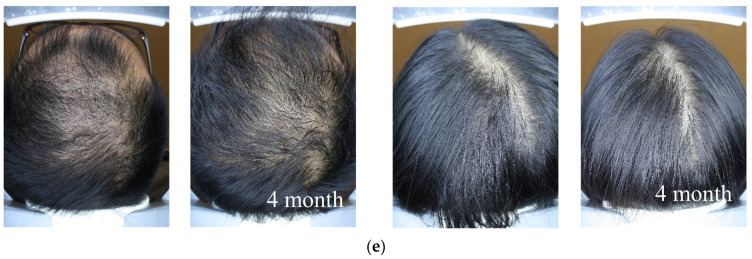
Adenosine showed anti-androgenic activity in vitro and ex vivo in the elongated anagen stages. Furthermore, both MNX and APN enhanced hair density and thickness, whereas adenosine decreased the vellus/terminal hair ratio. The adenosine complex enhanced scalp health and was more susceptible to hair thickness growth via anti-androgenic activity.
Caffeine for hair loss
Caffeine is a natural stimulant that belongs to the class of compounds called xanthines. It is commonly found in coffee, tea, and chocolate and is known for its ability to boost alertness and energy levels. In relation to hair loss, there is some scientific evidence to suggest that caffeine may help promote hair growth. Caffeine has been shown to stimulate hair follicles, promote hair shaft elongation, and prolong the anagen (growth) phase of the hair cycle. Some hair care products now include caffeine in their formulations as a way to potentially support hair growth.
Melatonin for hair loss
Melatonin is a hormone that is naturally produced in the body and is known to regulate sleep-wake cycles. It is also available as a supplement and is commonly used to improve sleep quality. Regarding hair loss, there is some limited research suggesting that melatonin may have a positive effect on hair growth. One study found that topical application of melatonin led to an increase in hair density in women with androgenetic alopecia (female pattern baldness).
Related studies
https://pmc.ncbi.nlm.nih.gov/articles/PMC3681103
In summary, it can be stated that multiple studies with different study designs observed mostly positive effects resulting from the topical application of a cosmetic melatonin solution in women and men with early-stage AGA (Phase I and II, Hamilton and Ludwig scales, respectively) or general hair loss with a partial reduction in hair loss, as well as new hair growth in some cases.
Emodin for hair loss
Emodin is a natural chemical compound found in certain plants, particularly in the roots and barks of various plants like rhubarb and buckthorn. It has been studied for its potential anti-inflammatory, antioxidant, and anticancer properties. Some research suggests that emodin may also have antibacterial and antiviral effects. Regarding its effects on hair loss, there is limited specific data on the direct impact of emodin. Some studies have shown that emodin may potentially promote hair growth by stimulating hair follicles and increasing blood circulation to the scalp, which could potentially benefit individuals experiencing hair loss.
Related studies
https://www.researchgate.net/publication/305265505
After 13 days of treatment, minoxidil or emodin (0.01% or 0.1%)-treated groups showed remarkable regrowth of hairs relative to the vehicle control group. Scoring of the hair growth and rate of hair growth area for 15 days revealed that groups treated with minoxidil and 0.1% emodin were significantly higher than the vehicle control group. Histological examination revealed the emodin and minoxidil groups markedly recovered the number and morphology of hair follicles, including the subcutis depth, relative to the vehicle group. These results suggest that emodin has an excellent promoting effect in hair growth similar to that of minoxidil and might be useful for treatment of baldness or alopecia.
Levocetirizine for air loss
Levocetirizine, an antihistamine, may have potential benefits for hair loss by promoting hair growth through its ability to inhibit the production of prostaglandin D2 (PGD2), a molecule that can hinder hair follicle development.

Discount code for low dose topical finasteride at the lowest cost:
Enter ‘HOMEBREWZERO’ at the checkout for 7% discount and your opportunity to help solve hair loss.